
Exploring 'Cottagecore' as a Muslim
Old Tudor cottages enveloped in fragrant climbing roses, strolling sun-lit country lanes and hanging frilly floral dresses on the washing line. Quite the romantic image is it not? The cottagecore movement has been gaining popularity over recent years and its enchanting nature drew me in from the moment I discovered it.
It's so easy to get pulled into trends when they are plastered all across our social media, but I feel it's important to do a little research first if your life is centred in faith. As a muslim I wanted to explore the principles of cottagecore, what is it, and can we find Islamic scripture to support it's basic elements? Let’s take a dive and transform what at face-value seems a rather trivial topic, into something which I believe has the potential to bring us closer to God.
What is Cottagecore?
Think Jane Austen Novels, Anne of Green Gables, Period Drama's set in picturesque leafy countryside. Cottagecore is a style aesthetic and way of living that was first given its name on Tumblr back in 2018, but don’t cast it off yet as some nonsense internet trend with no value. On the contrary, I think there’s a little more to it.

Cottagecore celebrates simple slower living rooted in traditional skills, sustainability and connection to nature. It paints a quaint picture of wholesome domesticity; wearing a hand sewn lace trimmed dress whilst baking bread or gardening, feeding chickens or taking a picnic in the meadow.
As a clothing style it often features natural materials, cottons, linens, prints like ginghams and florals, puff sleeves, ruffles and pleated waists. It characterises long flowing skirts and dresses, often in natural tones of white, green, brown, cream and tan. The fashion is a blend of rural and romantic styles, stemming from multiple eras. The lace detailing and intricate designs are inspired by Edwardian and Victorian eras, whilst the puff sleeves have been popular throughout history from the 14th century to 19th century.


Why was I Drawn to it?
I’d describe myself as a simple gal, wholeheartedly frustrated with social media, and this movement arose as a backlash to industrialisation and technology. It’s of course an idealised lifestyle, a romanticised view of rural living without portrayal of the hardships. But nevertheless, many of the fundamentals of cottagecore living align with my own beliefs on slower living (check out my previous blog post on slow living).
Cottagecore encourages learning homesteading skills such as baking, growing vegetables, fruit preserving, sewing your own clothing, all the things that enable self-sufficiency. Despite the convenience of the modern world I think training in traditional skills is so important, these skills are our heritage and have shaped human history. I wanted to learn and explore more about embracing a traditional skills life because they're how our ancestors ensured survival.

I think these skills teach patience and attention to detail, the tasks can't be rushed, certain steps must be followed, there's a discipline to them. There's a process. I want to develop more skills in which I slow down, move with intention and invest my time into something where the reward isn't instant.
I've previously researched the effects of highly stimulating activities and how they impact our dopamine levels (the pleasure hormone). The worry can be that when we consume ourselves with highly stimulating activities; videogames, Tv, socialmedia, online shopping, then our neurotransmitter system gets hijacked and we no longer feel pleasure from smaller everyday rewards. The last thing I want to do is squander my potential happiness by self-sabotaging my ability to feel joy and pleasure from the simple things. I love the notion of ‘simpler times’, conversations with friends about recipes and what’s flourishing in the kitchen garden.. instead of ‘did you see this prank reel on TikTok?’. Ugh. I roll my eyes..
My personal dream life, albeit a dream, would be living on a modest plot of land, owning a few chickens and having a thriving vegetable garden. I believe that would foster me feeling well and truly connected to the earth, the seasons, and The Creator of it all. That connection to our Creator, is ultimately most important!
Cottagecore Living Inspired by Islam
So does Islamic scripture refer to any of the key features of the cottagecore lifestyle? I would like to break this down into two categories, cottagecore activities and cottagecore as a clothing style.
Cottagecore Clothing
The majority of cottagecore fashion centres around flowing dresses and skirts of maxi length, so replicating this as a Muslim woman isn’t problematic. The Victorian/ Edwardian Era prairie and regency dresses were made to emphasise modesty and portray an image of elegance and refinement. This aligns very well with our Islamic values as the Quran states:
“O Prophet! Tell your wives and your daughters and the women of the believers to draw their cloaks all over their bodies” (Al Ahzab 33.59)

As mentioned earlier, some of the most popular cottagecore dresses are in clean whites of cotton and linen. It’s interesting to note the hadith in which Samurah (May Allah be pleased with him) reported: The Messenger of Allah ﷺ said,
'Wear white clothes because they are the purest and they are closest to modesty” (Rita’s as-Salihin 779)
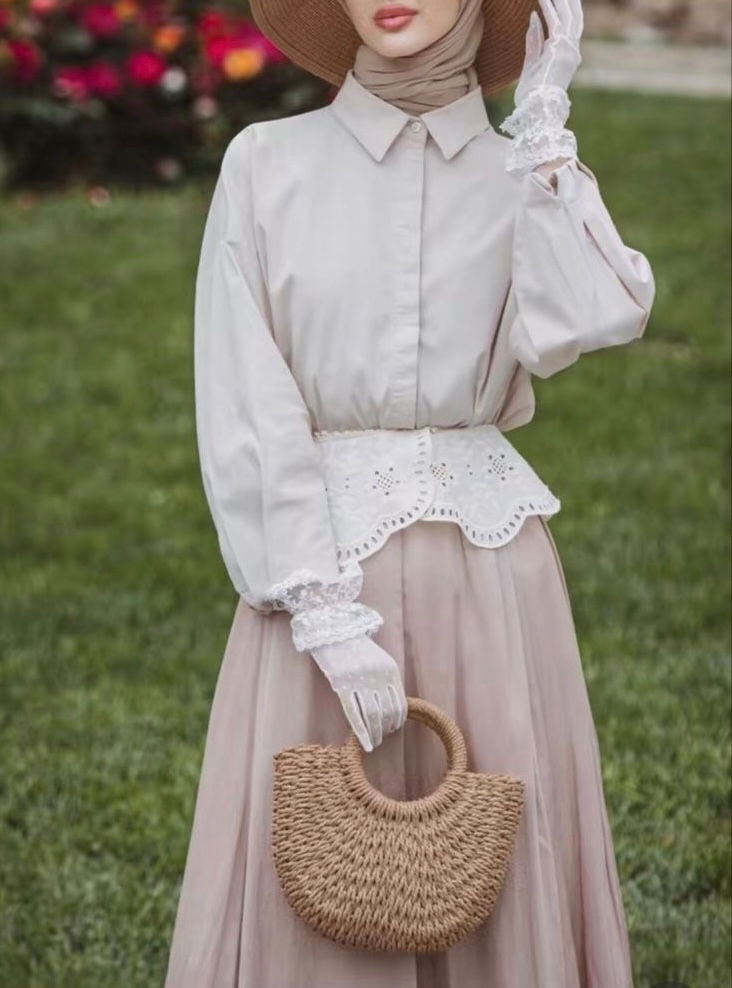
As a clothing style, I don’t think any word can describe cottagecore better than feminine!
The romantic ruffled floral dresses, embroidered blouses, tiered skirts, aprons, it is all traditionally, fiercely and beautifully feminine. When I put on my frilly gingham cottagecore maxi dress I feel more connected to my feminine energy. Islam encourages men to be masculine and women to be feminine and for us not to imitate one another through androgynous expression. As Muslim women it’s important for us to make clothing choices that reflect our unique femininity.
Ibn 'Abbas narrated, "the Prophet Muhammad ﷺ cursed the women who imitate men and the men who imitate women." (Jami' at-Tirmidhi 2784)
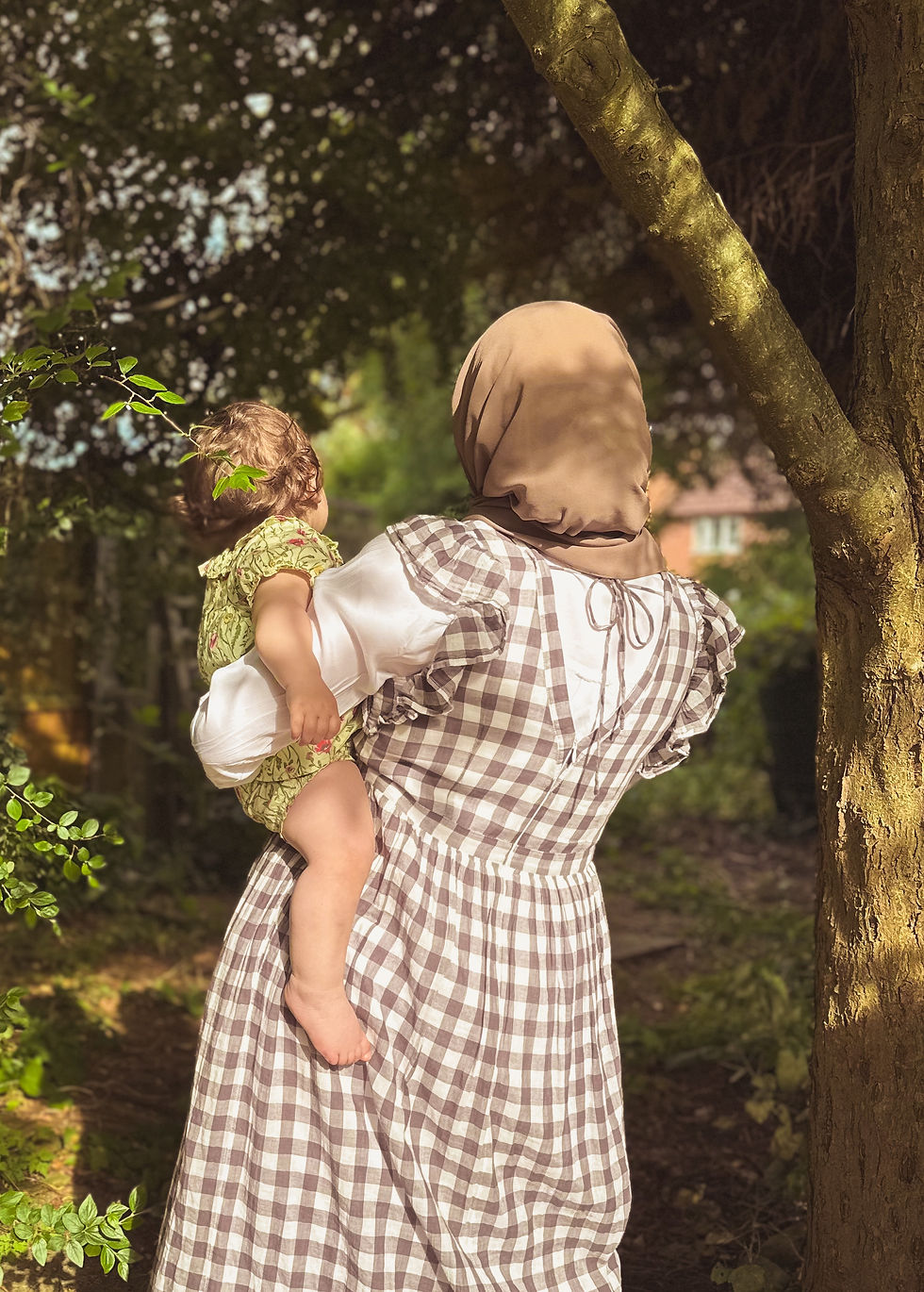
Ofcourse it is essential to be mindful as not every single hashtag # cottagecore dress will be appropriate for Muslim women. Low necklines and short hemlines do not align with our values and it is crucial that we prioritise our religious convictions over ‘cute outfits’. Layering works fantastic with this clothing aesthetic and I particularly like pairing white blouses with sleeveless maxi dresses. Or, a tiered white lace trim maxi skirt underneath a dress that doesn’t quite reach the ankles.

Cottagecore Activities
As discussed earlier there is a process to many of the cottagecore homesteading tasks requiring us to be slow, mindful and thoughtful. It is well known in Islam that Allah loves patience and there is wisdom to be taken both from the Quran and Hadith on how God also wants us to be mindful. So when we are undertaking daily activities such as cooking from scratch, hand-sewing and gardening we can smile and think of these pieces of scripture:
“And Allah loves As-Saabirun (the patient).” (Al ‘Imran 3:146)
“The heart is tarnished by two matters: unmindfulness (al-ghafiah) and sin. And it is polished by two matters: seeking forgiveness and the remembrance of Allah” (al-Qahira: Dar al-Hadith, 1999 1:40)
“Indeed in that is a reminder for whoever has a heart or who listens while he is present in mind” (Surah Qaf, 50:37)
Slow living and mindfulness in similar respect are about pausing to consider our choices, deliberating, and not being hasty. Many tasks like cooking and sewing all involve a calmness and taking the time to ensure things are done properly. In Islam it is known that God loves deliberation. Ibn `Abbas, Allah be pleased with them both, narrates that the Messenger of Allah ﷺ said to al-Ashajj Ashajj `Abd al-Qays,
“You have two characteristics which Allah loves: forbearance and deliberation.” (Sunan Ibn Majah 4187)

Another interesting point is that the Prophet Mohammad, peace and blessings be upon Him, used to sew his own clothes, making it a sunnah (tradition of the prophet which Muslims should model). Sewing clothing is a big part of the cottagecore culture and is a way of living a more eco-friendly life. Aysha RA relates that the Messenger of Allah ﷺ used to
“sew his own clothes, mend his own shoes and do whatever other work men do in their homes.” (Musnad Ahmad and Sahih Jami).
When it comes to partaking in a little cottagcore gardening we should take comfort in knowing there are many Hadith encouraging working the land and planting. Gardening is an act that can bring us closer to Allah when done mindfully. Jabir bin Abdillah R.Anhuma narrated that the Prophet ﷺ said:
"He who has land should cultivate it himself, but if he does not cultivate it himself, then he should let his brother cultivate it" (Sahih Muslim 1536)

A quick Google search of ‘cottagecore activities’ will lead you to lists of - jam making, quilting, fermenting, knitting, foraging, basket weaving and cleaning. Islam guides women towards being a shepherdess, a unique God given role of being responsible for the family home and children. This aligns perfectly with the cottagecore lifestyle of females undertaking these homemaker tasks which historically links to being a keeper of the homestead. Ibn 'Umar reported that the Prophet Muhammad ﷺ said:
“Each of you is a shepherd, and each of you is responsible for his flock. The amir is a shepherd. The man is a shepherd, and he is responsible for his family. The woman is a shepherdess, and she is responsible for her husband’s home and children. Each of you is a shepherd, and each of you is responsible for his flock.” (Al-Adab Al-Mufrad 212)

I hope this post inspires your interest in cottagecore, and God willing your interest in Islam. My aim was to uncover how this movement can be practically lived out very easily in accordance with Islam and as more than just an instagram aesthetic. I love romanticising my life with cottagecore, putting on a long floral dress as I cook dinner, but what I love most is knowing that these acts when done mindfully actually resonate spiritually, not just stylistically. If you fell into cottagecore by chance, maybe now you can experience it on a deeper level. If you're a muslim sister exploring other internet styles like Y2k, fairy-core, grunge, I invite you to take a pivot and look into cottagecore.
Peace be upon you,
An English Muslim Homemaker


Inspirational! Great read✌️